
 By
By 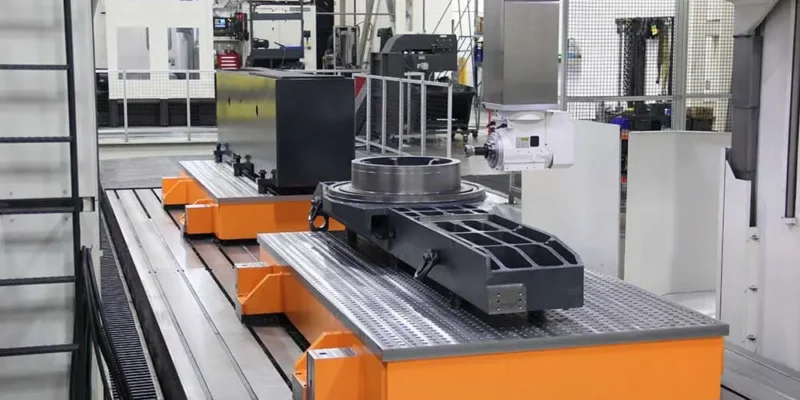
CNC milling (Computer Numerical Control Milling) is a highly advanced, subtractive manufacturing technology that has transformed modern industrial production. By utilizing computer-guided rotary cutting tools to progressively remove material from a static workpiece, CNC milling enables the creation of highly complex, high-precision three-dimensional components. This article provides a detailed technical overview of CNC milling-including its underlying principles, machine configurations, programming approaches, material adaptability, and key industry applications-alongside how precision leaders like CS Rapid MFG deliver world-class CNC milling solutions.
Fundamentals of CNC Milling
At its core, CNC milling relies on a multi-axis rotary cutting tool driven by digitized G-code instructions. Unlike CNC turning-where the workpiece rotates against a stationary single-point tool-CNC milling holds the workpiece securely on a machine fixture while the high-speed spindle moves the cutting tool across multiple axes simultaneously.
These motion vectors include standard linear axes (X, Y, and Z) as well as rotational axes (A, B, and C). The integration of multiple axes enables tool engagement from nearly any orientation, producing intricate geometries, compound angles, and complex surface contours with extreme geometric fidelity.
Because tool paths, spindle speeds, depth of cut, and coolant delivery are fully automated by computer programs, manual intervention during machining cycles is minimized. This automation yields consistent quality, sub-millimeter accuracy, and uniform surface finishes-critical for demanding parts like automotive cylinder heads, engine blocks, and internal valve ports.
Types of CNC Milling Machines
CNC milling machines are categorized based on spindle orientation and available axes of movement:
1. Vertical Machining Centers (VMC)
VMCs feature a vertically oriented spindle perpendicular to the worktable. They are exceptionally suited for top-surface operations such as drilling, tapping, face milling, and end milling. VMCs are widely utilized for small-to-medium parts, fixtures, housings, and custom brackets.
2. Horizontal Machining Centers (HMC)
HMCs utilize a horizontal spindle orientation, allowing cutting tools to engage the sides of a workpiece. This orientation facilitates heavy material removal, rapid chip clearance, and multi-sided tombstone machining in a single setup. HMCs are standard in large-scale structural manufacturing, such as aerospace wing ribs and heavy equipment components.
3. Multi-Axis CNC Milling (3-Axis, 4-Axis, and 5-Axis)
3-Axis Milling: Moves tools along the linear X, Y, and Z axes. Ideal for relatively simple mechanical components and planar features.
4-Axis Milling: Adds a rotation axis (typically A-axis around X), allowing multi-sided indexing or rotary cutting without repositioning the workpiece.
5-Axis Simultaneous Milling: Moves cutting tools simultaneously across three linear axes and two rotational axes (such as A and B or B and C). This ultra-precise configuration allows the cutter to approach the workpiece from all angles, making it possible to execute extremely complex geometries-such as turbine impellers, organic organic curves, and custom dental or orthopedic implants-with superior surface quality and minimal setups.
CNC Milling Programming Methods
Generating exact tool motion relies on two core programming methods:
Manual G-Code Programming: Operators hand-write code using standard alphanumeric syntax-such as G00 (rapid traversal), G01 (linear feed), G02/G03 (circular interpolation), and M codes (spindle controls and coolant commands). While effective for simple parts or quick machine-side adjustments, manual coding for complex geometries is labor-intensive and prone to human error.
CAM (Computer-Aided Manufacturing) Software: The design engineer creates a 3D CAD model, which is then imported into CAM software to calculate optimal toolpaths, feed rates, and step-overs automatically. CAM programming significantly reduces programming time, optimizes material removal rates, and prevents tool collisions on complex multi-axis parts.
Material Compatibility in CNC Milling
CNC milling exhibits remarkable material versatility, machining everything from soft plastics to tough aerospace alloys:
Metals:
Aluminum (e.g., 6061-T6, 7075): Highly valued for its lightweight nature, excellent strength-to-weight ratio, and high machinability. Widely used in aerospace structures, automotive housings, and electronic enclosures.
Steel & Stainless Steel (e.g., 304, 316, 4140, 17-4 PH): Known for superior hardness, structural strength, and wear resistance. Stainless steel grades are preferred in medical instruments and food processing machinery due to corrosion resistance.
Titanium & Inconel: Superalloys capable of withstanding extreme thermal and mechanical stresses, crucial for jet engine components and surgical implants.
Plastics & Polymers:
Engineering Plastics (PEEK, Delrin/POM, Nylon, Polycarbonate, Acrylic): Selected for low weight, electrical insulation, low friction, or optical clarity.
Composites:
Carbon Fiber Reinforced Polymers (CFRP): Exceptional stiffness-to-weight ratio, ideal for automotive racing and aerospace applications, though requiring specialized diamond-coated tooling to prevent delamination.
Advantages and Operational Considerations
Advantages
- Extreme Accuracy: Computer numerical control routinely yields tight manufacturing tolerances down to ±0.005 mm (or a few thousandths of an inch).
- High Repeatability: Delivers flawless dimensional fidelity across prototype testing through high-volume production batches.
- Geometric Freedom: Multi-axis milling easily realizes undercut features, complex draft angles, and free-form organic surfaces impossible with conventional manual machinery.
Considerations
Equipping advanced 5-axis machinery in-house involves substantial capital expenditures, ongoing maintenance, tool wear management, and dedicated engineering expertise. For many businesses, partnering with an established, on-demand precision contract manufacturer is the most cost-effective solution.
On-Demand CNC Milling Services by CS Rapid MFG
To bridge the gap between engineering design and cost-effective production, CS Rapid MFG (CS Mold Co., Limited) offers complete, professional CNC milling and precision manufacturing services globally.
Based in Dongguan, China, and ISO 9001:2015 certified, CS Rapid MFG operates an extensive 10,000+ square meter production facility equipped with over 80 high-precision CNC machines-including state-of-the-art Hermle and DUG 5-axis, 4-axis, and 3-axis CNC milling centers.
Why Choose CS Rapid MFG for CNC Milling Projects?
- Full-Spectrum Precision Machining: From rapid 3-axis prototype milling to complex simultaneous 5-axis machining, CS Rapid MFG produces low-volume prototypes and high-volume end-use parts with exceptional surface finishes and tight tolerance control.
- Integrated DFM Analysis: Before machining begins, experienced project engineers conduct rigorous Design for Manufacturability (DFM) reviews to verify tolerances, geometric feasibility, and cost optimization.
- Rapid Turnaround & No MOQ: Parts can be manufactured in as fast as 3 to 5 days, supported by complete flexibility-from single prototype units (No MOQ required) to full production runs.
- One-Stop Manufacturing Ecosystem: In addition to precision CNC milling, CS Rapid MFG offers complementary services including CNC turning, sheet metal fabrication, plastic injection molding, and rapid tooling, making it a unified single-source partner for multi-process assemblies.
To explore technical case studies or submit 2D/3D CAD models for an instant 12-hour quote, visit the official website at CS Rapid MFG.
Conclusion
CNC milling remains an irreplaceable foundation of modern precision engineering. Its ability to turn raw metal and plastic blocks into intricate, high-performance parts drives innovation across the aerospace, medical, robotics, and automotive sectors. By leveraging the advanced multi-axis infrastructure and engineering capabilities of contract specialists like CS Rapid MFG, companies worldwide can accelerate product development, lower manufacturing overhead, and bring complex concepts to market with uncompromised quality.












Comments